October 1995
The Layoff
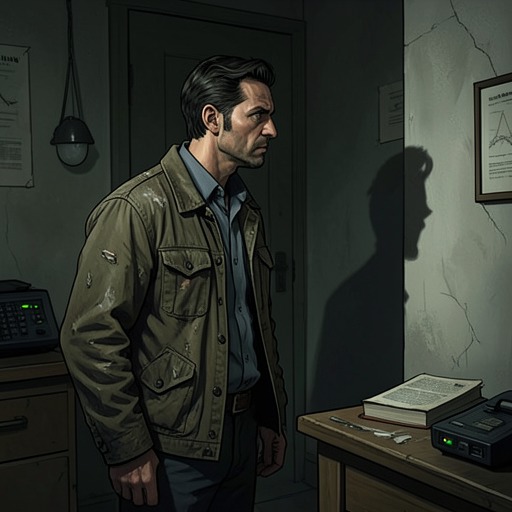
After rumors and earlier staff reductions, [Halcyon Mills](entity:organization-recall-organization-halcyon-mills-6100a9ba2e39) gives [Burke Devore](entity:character-recall-character-burke-devore-be3ea3092502) a yellow notice that his position will end. His product line is being discontinued, its work transferred to [Canada](entity:location-recall-location-ed6a2f8d0910), and his twenty years with the company no longer protect him.
The long transition period and formal severance package soften the blow without changing its meaning: Burke has lost the work that supported his household and defined his ordinary life.
After October 1995
The Household Economies
[Marjorie Devore](entity:character-recall-character-marjorie-devore-aa1ef3270ca8) immediately begins reducing expenses. She cancels activities and premium television, lets subscriptions lapse, and replaces more costly meals with cheaper staples; the family has to treat small comforts as luxuries.
Burke hides how severe their financial position has become, believing that protecting his family means keeping them from seeing the full extent of the danger. That silence gradually turns unemployment into a private burden rather than a shared problem.
The eleven months after the layoff
The Job Search
Burke sends out résumés, studies trade magazines, travels to interviews, and repeatedly returns home without an offer. Companies have more qualified applicants than openings, and his specialization does not guarantee a hearing, much less a job.
He sees how interviews reward salesmanship and personal rapport as much as experience. The repeated silence from employers makes him feel that ordinary effort cannot overcome a labor market crowded with equally capable people.
During Burke’s final months at Halcyon Mills
The Unemployment Training
As part of the separation process, Burke and his coworkers attend sessions on résumé writing, job interviews, finances, and retraining. One counselor tells them that nobody owes them a job and that they must fight to make themselves wanted.
The message becomes a harsh rule in Burke’s mind. The company’s version of support feels like a performance designed to ease workers out the door, while the insistence on personal responsibility feeds his belief that survival depends on outcompeting others.
February 1997
The Fake Job Advertisement
Burke rents a post office box in [Wildbury](entity:location-recall-location-wildbury-b25cae385f02) and creates letterhead for a fictitious concern, [B. D. Industrial Papers](entity:organization-recall-organization-b-d-industrial-p-f5f29a2de1ff). He writes a job advertisement closely tailored to his own paper-industry experience and pays to place it in The Paperman.
The false vacancy promises a managerial position in specialty paper manufacturing. Burke tells himself the deception is not a fraud but a way to learn who else might compete with him for the few jobs he believes he can still get.
March through May 1997
The Résumé Collection
Responses arrive in a steady stream, eventually numbering more than two hundred. Burke studies each résumé, separating applicants whose experience is irrelevant from those who could plausibly rival him in the specialized paper business.
The growing file gives him a secret sense of control, then becomes a catalogue of people who may be slightly more qualified, better educated, or more persuasive than he is. What began as research becomes a way to identify threats.
Before the murders
The Arcadia Article
An article in Pulp describes [Arcadia Processing](entity:organization-recall-organization-arcadia-processi-f230af931155)’s successful polymer-paper operation and its production manager, [Upton Fallon](entity:character-recall-character-upton-fallon-b4ee171a9d5f). Burke recognizes the job as one he could perform better, but realizes that removing Fallon would not guarantee the vacancy for him: the résumé collection contains other rivals.
He nevertheless begins to imagine killing Fallon, then confronts the larger obstacle of the people who might take the job first. His plan expands from resentment toward one incumbent into a campaign against a whole field of competitors.
April 1997
The Luger Preparation
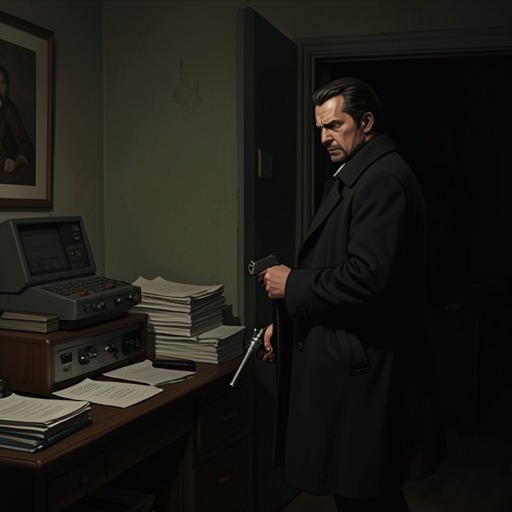
Burke retrieves his father’s [Luger pistol](entity:object-recall-object-luger-pistol-857615e06753) from an old army trunk. He buys a manual, oils the weapon, replaces its old ammunition, and practices firing at trees in a deserted field.
His attention to the mechanics lets him postpone confronting the purpose of the preparation. The gun turns an imagined crime into a practical possibility, and Burke begins to ask whether he can actually kill someone.
After reading about Upton Fallon and before May 8, 1997
The Decision to Kill
Burke repeatedly considers whether Fallon’s death could open the way to a job, but each time he remembers that another applicant could take the position. Eventually he narrows his attention to six résumé writers whose backgrounds and locations make them direct competitors.
He tells himself that the corporate system has made them enemies, though he understands that the unemployed applicants are not responsible for the system. In his reasoning, they are simply the immediate obstacles between his family and financial security.
Before May 8, 1997
The Visit to Arcadia
Burke visits [Arcadia](entity:location-recall-location-arcadia-da516d4ec16e) and sees [Upton Fallon](entity:character-recall-character-upton-fallon-b4ee171a9d5f) at lunch with mill workers. He hears their familiar shop talk and recognizes how much he misses belonging to the paper business.
The sight of Fallon, who seems less capable than Burke yet holds the desired position, hardens Burke’s resolve. He returns home and chooses a résumé from his file as the first target.
Thursday, May 8, 1997
Herbert Everly’s Murder
Burke drives to [Fall City](entity:location-recall-location-fall-city-613202b4a74a) and waits near [Herbert Coleman Everly](entity:character-recall-character-herbert-coleman-eve-6b2d91209270)’s home. When [Everly](entity:character-recall-character-everly-fb45361f9879) comes to his mailbox, Burke confirms his identity, raises the Luger, and shoots him through the open window of the [Voyager](entity:object-recall-object-voyager-ec5ea59eb239).
The killing is sudden and, to Burke, unnervingly straightforward. He drives away convinced that he has proved he can do what he planned, even as the first act of violence begins to weigh on him.
Friday, May 9, 1997
The Return Home
Burke returns home from the supposed interview in Harrisburg and tells [Marjorie](entity:character-recall-character-marjorie-243b0f7c8929) that the job did not work out. He stores the gun and [Everly](entity:character-recall-character-everly-fb45361f9879)’s résumé in his office, keeping the murder separate from family life.
Alone in the shower, he remembers Everly as a decent man with a family and feels guilt. He nevertheless concludes that unemployment leaves him no acceptable alternative, and begins selecting another target.
Monday, May 12, 1997
The First Ricks Stakeout
Burke drives to [Longholme](entity:location-recall-location-longholme-cb757c9945e5) to watch the home of [Edward George Ricks](entity:character-recall-character-edward-george-ricks-f323b8c0ce80), another applicant whose background threatens his chances. He waits near a vacant house, hoping to catch Ricks alone when he collects the mail.
Instead, [Mrs. Ricks](entity:character-recall-character-mrs-ricks-531fc35c88ae) arrives in a minivan, gathers the mail, and drives into the garage. Burke leaves without finding a clear opportunity, but now knows he must return earlier and wait longer.
Thursday, May 15, 1997
The Return to Berkshire Way
Burke returns to [Longholme](entity:location-recall-location-longholme-cb757c9945e5) and waits for the mail carrier, hoping Ricks will come outside. [Mrs. Ricks](entity:character-recall-character-mrs-ricks-531fc35c88ae) suddenly confronts him, mistaking him for the older man involved with her daughter, [June Ricks](entity:character-recall-character-june-ricks-0a2c2350d1cd).
She shouts that he is destroying her family and calls for her husband. The misunderstanding exposes Burke’s gun and turns a quiet stakeout into a panicked, uncontrollable encounter.
Thursday, May 15, 1997
The Ricks Murders
When [Mrs. Ricks](entity:character-recall-character-mrs-ricks-531fc35c88ae) sees the Luger, she screams and runs toward the house. Burke chases and shoots her from behind, then sees [Edward Ricks](entity:character-recall-character-edward-ricks-b835d1b4a687) in the doorway and fires at him, missing on the first shot before following him into the garage and killing him.
The scene is far messier than [Everly](entity:character-recall-character-everly-fb45361f9879)’s death. Burke escapes shaken by the wife’s mistaken accusation and by the terror of the people he has killed, yet he still tells himself he had no way to stop the crisis once it began.
The evening of May 15, 1997
The Ringer Suspect
That night, the news reports the murders and identifies [Lewis Ringer](entity:character-recall-character-lewis-ringer-8f832ab158c1), the literature professor involved with [June Ricks](entity:character-recall-character-june-ricks-0a2c2350d1cd), as the police suspect. The report describes the pursuit and shootings without revealing Burke’s panic or the mistaken identity that precipitated them.
Burke watches beside [Marjorie](entity:character-recall-character-marjorie-243b0f7c8929), outwardly sharing her horror. The public account gives the murders a ready-made motive and directs suspicion away from him.
Monday, four days after the Ricks murders
The Ringer Suicide
Burke and [Marjorie](entity:character-recall-character-marjorie-243b0f7c8929) hear that [Lewis Ringer](entity:character-recall-character-lewis-ringer-8f832ab158c1) has hanged himself after police release him for lack of physical evidence. Ringer’s wife has left, and [June Ricks](entity:character-recall-character-june-ricks-0a2c2350d1cd) has publicly suggested that he killed her parents for love of her.
The authorities treat his death as the end of the case. Burke feels the pressure lift: the investigation has settled on someone else, and he can resume his campaign without expecting the Ricks murders to expose him.
After Lewis Ringer’s suicide
The Choice of Dynes
Burke reopens the résumé file and chooses [Everett Boyd Dynes](entity:character-recall-character-everett-boyd-dynes-ed2ead06a31a), whose history in paper manufacturing makes him a serious rival. Dynes lives in [Lichgate](entity:location-recall-location-lichgate-3e6fbbbea3f3), far enough away to put the next operation in a different part of New York State.
Burke’s urgency grows as he imagines future waves of laid-off managers entering the same labor pool. He believes the current rivals must be removed before a new round of applicants arrives.
Thursday, May 22, 1997
The Road to Lichgate
Driving north, Burke reflects on automation, computers, and the shrinking need for middle managers. He thinks of himself as part of a broad social upheaval but insists that he can only act on the threats closest to his own family.
His reflections on transitional technologies and economic change help him justify a private solution to a public crisis. He arrives in [Lichgate](entity:location-recall-location-lichgate-3e6fbbbea3f3) determined to kill Dynes and return home quickly.
Thursday afternoon, May 22, 1997
The Lichgate Stakeout
Burke locates Dynes’s house on [Nether Street](entity:location-recall-location-nether-street-5b81380ae843) and watches from a parked [Voyager](entity:object-recall-object-voyager-ec5ea59eb239). When Dynes leaves on foot, Burke follows him through town and sees him cross into the [SnowBird](entity:location-recall-location-snowbird-0cbb65b9f392) diner.
Burke plans to wait for Dynes to emerge, but discovers that his target works there as a counterman. The sight of a former paper manager serving meals transforms the abstract résumé into a living example of what unemployment has done to a rival.
Thursday afternoon, May 22, 1997
The Diner Conversation
Burke sits at the counter and speaks with Dynes, who is friendly, sympathetic, and candid about losing his paper-industry job. He describes the layoffs as a social madness that discards productive people at the height of their abilities.
Burke recognizes a fellow manager in the man across the counter and struggles to preserve the distance required by his plan. He learns Dynes works from four in the afternoon until midnight, creating a later opportunity to intercept him.
Just after midnight, May 23, 1997
Dynes’s Murder
Burke finds Dynes walking home in the rain and deliberately accelerates the [Voyager](entity:object-recall-object-voyager-ec5ea59eb239) into him. When Dynes survives the first impact and tries to rise, Burke reverses over him and drives forward again until he stops moving.
The killing leaves Burke sobbing and physically sick. Unlike the earlier shootings, it has forced him to use the car at close range, making the violence impossible to keep emotionally distant.
Early morning, May 23, 1997
The Abandoned Confession
Back at Dawson’s Motel, Burke writes a detailed confession to the murders of [Herbert Coleman Everly](entity:character-recall-character-herbert-coleman-eve-6b2d91209270), [Edward Ricks](entity:character-recall-character-edward-ricks-b835d1b4a687), [Mrs. Ricks](entity:character-recall-character-mrs-ricks-531fc35c88ae), and [Everett Dynes](entity:character-recall-character-everett-dynes-4d47dbb4bb36). He considers either killing himself or surrendering to the police, and decides he should atone.
After sleeping, he rereads the confession and retreats from the decision. He resolves to be more careful rather than stop, folds the pages away, and later burns them.
May 23, 1997
The Staged Collision
Burke realizes the damaged [Voyager](entity:object-recall-object-voyager-ec5ea59eb239) may connect him to Dynes’s death. On a wet road near Kingston, he intentionally rams a pickup backing out of a lumberyard, then presents himself as the innocent driver in an unavoidable accident.
Witnesses and police accept his account, and the collision gives him an official explanation for the damage. The deception lets him repair the vehicle while preserving his freedom to continue.
The Sunday after Dynes’s murder
Marjorie’s Plea
At home, [Marjorie](entity:character-recall-character-marjorie-243b0f7c8929) tells Burke that their marriage is being worn down by his silence and distance. She insists that they need counseling, warning that she may move out if they cannot address what has happened between them.
Burke first imagines she is involved with another man and mentally considers killing him. He agrees to counseling, partly because he wants to save the marriage and partly because he knows he cannot expose the murders.
The week after Marjorie’s plea
The First Counseling Session
Burke and [Marjorie](entity:character-recall-character-marjorie-243b0f7c8929) meet [Longus Quinlan](entity:character-recall-character-longus-quinlan-0670e9ff017e), who listens to their account of Burke’s prolonged unemployment and explains that counseling cannot simply restore their former life. The couple must discover what they want now, rather than assume the past can be recovered unchanged.
Burke is wary of Quinlan’s optimism, but agrees to return. The sessions create a space for the marriage’s underlying damage even as Burke conceals the violence occupying his private life.
The days after Dynes’s murder
The Car Repair
Burke takes the damaged [Voyager](entity:object-recall-object-voyager-ec5ea59eb239) to the dealership and works with Jerry to obtain separate repair estimates for himself and the insurance company. Jerry reveals that his own wife has been laid off from a hospital, another reminder that insecurity has spread across industries.
The insurance claim is accepted, and the car is repaired. A [State Police](entity:organization-recall-organization-state-police-f1fda5cf27fd) trooper later asks Burke about the vehicle, but his staged-collision story and paperwork withstand scrutiny.
Late May 1997
The Asche Reconnaissance
Burke visits Dyer’s Eddy to observe [Kane Bagley Asche](entity:character-recall-character-kane-bagley-asche-a3451ff29363), another résumé competitor. He finds [Asche](entity:character-recall-character-asche-e56ae1366729) and his wife gardening together, apparently close and content, and sees no safe opening to attack him without risking another domestic killing.
The couple’s togetherness frustrates Burke, who waits for them to separate and eventually leaves without acting. He now understands that a target’s ordinary home life can make his planned violence more difficult, not less.
Late May 1997
The Dynes Investigation
A trooper examines Burke’s repaired but still recognizable vehicle while he is near Dyer’s Eddy. Burke calmly repeats his story about the pickup accident, and the officer explains that police are looking for a vehicle connected to a hit-and-run in New York.
Burke realizes how close the Dynes killing came to leaving a trail. He understands that the police are now searching for the [Voyager](entity:object-recall-object-voyager-ec5ea59eb239), and that his ability to conceal the car’s damage has become essential.
Late May 1997
The Asche Stakeout
Burke returns to [Footbridge Road](entity:location-recall-location-footbridge-road-6fbaa4b5cbd8) and watches [Kane Asche](entity:character-recall-character-kane-asche-be9248aa422e) and his wife work in their garden. They remain together through the morning, collect the mail side by side, and go inside for lunch without giving Burke an opening.
He leaves hungry and frustrated, deciding he cannot wait indefinitely. Their closeness makes him consider the possibility of killing both, a decision he tells himself he may have to make if they never separate.
The early hours after Billy’s arrest
The Police Interview
A detective explains that the police have evidence tying the boys to the latest burglary and want to establish whether they committed earlier break-ins. Burke insists that this is [Billy](entity:character-recall-character-billy-553a8daaf10e)’s first offense and asks to speak with his son.
Burke sees the detective not as a neutral helper but as an adversary whose paperwork could damage Billy’s life. He tells Billy to maintain the truth that this is his first burglary, giving his son a story to hold onto under pressure.
Before dawn after Billy’s arrest
The Software Cleanup
At home, Burke finds a closet full of stolen computer software that could turn [Billy](entity:character-recall-character-billy-553a8daaf10e)’s case into a far more serious matter. He and [Marjorie](entity:character-recall-character-marjorie-243b0f7c8929) carry the packages to a distant mall and dump them in a supermarket trash container.
Burke also hides the Luger inside the [Voyager](entity:object-recall-object-voyager-ec5ea59eb239) and conceals evidence of the cache. The emergency draws Marjorie into an act of concealment without revealing the larger criminal operation her husband is conducting.
Sunday morning after the burglary
Billy’s Release
Unable to find a lawyer on Sunday, Burke and [Marjorie](entity:character-recall-character-marjorie-243b0f7c8929) eventually reach [Porculey](entity:character-recall-character-porculey-0c62484486eb), who helps them secure [Billy](entity:character-recall-character-billy-553a8daaf10e)’s release into their custody. The court process is bewildering, but their son comes home while the case continues.
On the drive back, Burke warns Billy that police may search the house. A police van is already waiting outside, but the officers find no stolen software in the home and leave after searching.
The evening after Billy’s release
The Highland Clearances Card
Burke studies a card on his office wall describing the [Scottish Highland Clearances](entity:time-recall-time-highland-clearances-4a520bfff108), when tenant families were removed so landlords could use the land for sheep. He sees the historical displacement as an ancestor of modern corporate downsizing.
The analogy gives Burke a political frame for his own choices: workers are cleared from productive lives for someone else’s gain. He uses the comparison to reaffirm his belief that he must take care of his family by whatever means are available.
The first days of June 1997
Blackstone’s Résumé
Burke studies the résumé of [Garrett Roger Blackstone](entity:character-recall-character-garrett-roger-black-c8b513d001ff), a plant manager with extensive experience and a strong record in the paper industry. Blackstone appears to be a more formidable rival than many of the applicants Burke has dismissed.
Burke plans to visit him after dropping [Marjorie](entity:character-recall-character-marjorie-243b0f7c8929) at work. The list of remaining targets has grown shorter, but the risks and complications of each operation continue to mount.
Early June 1997
Marjorie Ends the Affair
As Burke drops [Marjorie](entity:character-recall-character-marjorie-243b0f7c8929) at Dr. Carney’s office, she kisses him and quietly says that it is over. Burke understands that she means her affair with [James Halstead](entity:character-recall-character-james-halstead-05e03fec2f2b) has ended.
He wonders whether his improved attention to the marriage and his handling of [Billy](entity:character-recall-character-billy-553a8daaf10e)’s crisis have helped bring her back. The news relieves him, but the knowledge of the affair still shapes the couple’s effort to reconnect.
The next counseling session in early June 1997
Marjorie’s Confession
In counseling, [Marjorie](entity:character-recall-character-marjorie-243b0f7c8929) explains that Burke’s unemployment has made him withdraw behind a wall of secrecy. She describes feeling isolated, unable to share either her fear or her small moments of happiness, until she turned to another man for companionship.
She says the affair was an attempt to force Burke to recognize the crisis and return emotionally to the marriage. Burke hears how his effort to protect the family has made Marjorie feel excluded, and begins to recognize the damage caused by his silence.
Early June 1997
The Blackstone Reconnaissance
Burke watches Garrett Blackstone’s home from the woods and discovers that the property is difficult to approach. He sees Blackstone’s wife walk alone with a stick to warn away snakes, then reaches the house but finds it empty.
Burke leaves without acting. He has learned a route into the property but cannot yet locate Blackstone or separate him from his wife, and the delay deepens his impatience.
The following morning
The Blackstone Telephone Call
Burke calls Blackstone’s home pretending to be an old friend from the paper business. Blackstone’s wife tells him that her husband has just started a job he wanted at [Willis and Kendall](entity:organization-recall-organization-willis-and-kenda-ce4c7171cd1a), making the apparent résumé rival no longer a threat to the position Burke is seeking.
Burke is genuinely pleased for Blackstone and abandons the plan to kill him. For the first time, an applicant disappears from his target list because life has solved the competition without violence.
After Burke abandons the Blackstone hunt
Burton’s First Visit
[Detective Burton](entity:character-recall-character-detective-burton-4d97ab271d8b) visits Burke and asks whether he knows [Herbert Everly](entity:character-recall-character-herbert-everly-6c204028fb58) or [Kane Asche](entity:character-recall-character-kane-asche-be9248aa422e). He explains that both men had applied for the same job and were killed with the same gun, prompting police to look for connections among their professional contacts.
Burke denies knowing the victims, and Burton accepts that the shared job application may be coincidence. The visit reveals that ballistics can connect separate killings, a danger Burke had failed to consider when he assumed the old Luger was anonymous.
After Burton’s visit
The Last Résumé
Burke turns to the final résumé among his original competitors: [Hauck Curtis Exman](entity:character-recall-character-hauck-curtis-exman-f10327ffeaa5), a former Marine and longtime paper-company manager living in [Sable Jetty](entity:location-recall-location-sable-jetty-d7b5a6b9bea5). Because the Luger has linked two murders and the car killing was already dangerous, Burke decides he cannot use either method again.
He studies the geography around Exman’s home and admits he has no clear way to reach him. The shrinking list should mean the end is near, but each remaining target requires a new and more hazardous approach.
June 11, 1997
The False Interview Letter
Burke sends Exman a letter from [B. D. Industrial Papers](entity:organization-recall-organization-b-d-industrial-p-f5f29a2de1ff), claiming that the fictitious company wants to reconsider him for a job. It invites him to lunch with a supposed personnel director at the [Coach House](entity:location-recall-location-coach-house-56b2c20c6021) in [Regnery](entity:location-recall-location-regnery-d034c92aca26).
The plan leaves a paper trail and offers Exman a chance to question the nonexistent employer, but Burke hopes the lure of a position will outweigh his suspicions. He asks Exman to reply by mail, explaining that a call could create trouble at the plant.
By June 17, 1997
Exman Accepts
Exman returns the response form promptly, agreeing to meet. His eagerness reassures Burke that the letter has worked and that Exman has not investigated the missing phone number or challenged the arrangement.
Burke recognizes that he is not merely removing a competitor but manipulating a desperate job seeker with a fabricated opportunity. He regrets the cruelty, yet sees no other way to get Exman away from his guarded home.
June 17, 1997
Billy’s Sealed Indictment
At [Billy](entity:character-recall-character-billy-553a8daaf10e)’s court hearing, [Porculey](entity:character-recall-character-porculey-0c62484486eb) argues that the case should be separated from [Jim Bucklin](entity:character-recall-character-jim-bucklin-6cc441347ca2)’s. Bucklin’s family has had stolen software found in their home, while the Devore home yielded none, supporting the claim that Billy’s burglary was his first.
The judge seals Billy’s indictment for a year. If he avoids further trouble, the charge will be quashed, leaving him without a public conviction; Burke and [Marjorie](entity:character-recall-character-marjorie-243b0f7c8929) take the ruling as a hard-won reprieve.
Friday, June 20, 1997
The Coach House Stakeout
Burke waits near the [Coach House](entity:location-recall-location-coach-house-56b2c20c6021) and confirms that Exman has arrived for the supposed interview. Exman sits in the restaurant’s waiting area for hours, watching the time and hoping that the promised personnel director will appear.
Burke observes the humiliation his deception is causing but stays in place. When Exman finally gives up and leaves, Burke follows him, keeping enough distance to avoid attracting attention.
Later on Friday, June 20, 1997
Exman at Dolmen’s
Exman drives to a mall and enters [Dolmen’s](entity:location-recall-location-dolmen-s-16dce91fd61a), where Burke discovers that he works as a suit salesman. Burke approaches him under the name Hutcheson and pretends to be a customer who may return with his wife.
The encounter gives Burke a way to make Exman remember him and trust him. He calls [Marjorie](entity:character-recall-character-marjorie-243b0f7c8929) with a story about a former coworker’s business idea, arranging a plausible reason to stay out late.
Just before Dolmen’s closes on June 20, 1997
The Mall Ambush
Burke waits beside the [Voyager](entity:object-recall-object-voyager-ec5ea59eb239) with its hood open and the passenger door ajar, pretending the vehicle will not start. When Exman recognizes him and offers help, Burke sprays him with Mace and strikes him twice in the head with a hammer.
He carries Exman into the van, conceals him under a blanket, and drives home as shoppers leave the mall. The killing is calculated to look like a roadside breakdown rather than an attack on a résumé competitor.
Late night, June 20, 1997
The Body Disposal
At home, Burke binds Exman’s body with picture wire, wraps it in plastic, and separates the materials that touched the corpse from the body itself. He hides both bags in the cluttered garage until he can take them away.
The next day he disposes of the body at the recycling center, where ordinary refuse is compacted and carried away. Burke reflects that he has improved through practice, an efficiency that horrifies him even as he acknowledges it.
After Exman’s disappearance
Burton Links the Victims
[Detective Burton](entity:character-recall-character-detective-burton-4d97ab271d8b) returns and explains that police have linked [Everly](entity:character-recall-character-everly-fb45361f9879), [Asche](entity:character-recall-character-asche-e56ae1366729), and Exman to a past government contract meeting involving paper-company representatives. Exman has disappeared from his job, leaving his car behind, and Burton considers him the prime suspect in the killings.
Burton tells Burke that Exman had troubles at home and a history of relationships, and may have fled overseas. Burke conceals his relief that the police have chosen the wrong man, while recognizing that the investigation is narrowing around the same professional world he exploited.
The days after Exman’s murder
The Waiting for Fallon
Burke waits for [Arcadia Processing](entity:organization-recall-organization-arcadia-processi-f230af931155) to call about the opening he expects [Upton Fallon](entity:character-recall-character-upton-fallon-b4ee171a9d5f)’s death to create. When the call does not come immediately, he paces the house and imagines that the company may have promoted from within or chosen another applicant.
His confidence turns to renewed panic. He tells himself he will not stop until he has secured the job, and threatens in his thoughts to remove anyone else who stands in the way.
Tuesday, July 1, 1997
The Arcadia Call
An answering-machine message from [Arcadia Processing](entity:organization-recall-organization-arcadia-processi-f230af931155) asks Burke to return a call from John Carver. [Marjorie](entity:character-recall-character-marjorie-243b0f7c8929) hears it with him, and Burke recognizes that the expected opportunity may finally be real.
He tells her the call concerns his new job. After months of killing and concealment, the possibility of employment becomes tangible, though he still has not completed his plan to replace Fallon.
The evening of July 1, 1997
The Fallon Reconnaissance
Burke drives to [Arcadia](entity:location-recall-location-arcadia-da516d4ec16e) and uses a local phone book to locate [Upton Fallon](entity:character-recall-character-upton-fallon-b4ee171a9d5f)’s home near [Slate](entity:location-recall-location-slate-47360dcc90a8). He walks up the driveway and explores the old farmhouse after discovering an unlocked door.
Inside, he learns that Fallon is divorced, in debt, and responsible for younger children who visit during summer. Burke sees a pistol in Fallon’s bedside drawer and realizes that his final target is more dangerous and more complicated than the applicants who came before him.
Late on July 1, 1997
The First Fallon Retreat
Burke waits in Fallon’s darkened home and sees Fallon arrive with a drunken woman. The two enter together, making it impossible for Burke to attack without risking an unpredictable confrontation.
He quietly leaves the house and returns to his car. The first attempt ends without violence, but Burke remains determined to come back when Fallon is alone.
Thursday, June 26, 1997
The Return to Slate
Burke returns to Fallon’s house at night, carrying duct tape, picture wire, an iron pipe, and gloves. He enters through the unlocked door and waits in the dark, under pressure to finish before Fallon’s children arrive for their summer visit.
Burke’s exhaustion is growing, but he sees the family visit as a deadline. He has no single method in mind and plans to adapt once he knows how Fallon comes home.
Late night, June 26, 1997
Burke Caught in the House
Burke falls asleep at Fallon’s desk. Fallon comes home drunk, discovers the stranger, and confronts him with the revolver from his bedside drawer.
Burke improvises a story: he claims to be a paper manager whose job is threatened and says he came to ask for advice. His Halcyon employee identification card helps confirm his account, and Fallon lowers his guard.
The early hours after June 26, 1997
The Late Night Conversation
Fallon invites Burke into the kitchen, gives him beer and rye, and talks about employers, paper production, and the people they have both seen discarded. Burke, who drinks little, pretends to keep pace while listening to Fallon’s expertise.
The conversation makes Fallon seem not like an obstacle but like a fellow worker who understands the same industry and its injustices. Burke even imagines ways they might both keep their jobs, but returns to the conclusion that one of them must go.
After midnight, late June 1997
The Fallon Murder
When Fallon finally falls asleep at the kitchen table, Burke tapes his ankles to the chair and secures his torso. He covers Fallon’s mouth and nose, then leaves the kitchen while Fallon struggles to breathe.
Burke returns to find that Fallon has vomited and suffocated. The death is intimate and distressing, but Burke continues with the plan, wiping the house and arranging the scene to support an accidental explanation.
The night of Fallon’s murder
The Gas Explosion
Burke lights a candle in the kitchen, turns on the gas burners, extinguishes the flame, and leaves the house. He expects the accumulating gas to ignite and make Fallon’s death appear to be the result of a drunken accident.
From a distance, Burke sees the house erupt in a bright blast. He turns the [Voyager](entity:object-recall-object-voyager-ec5ea59eb239) around and drives home, having destroyed the scene and the last man between him and the job he wants.
The weekend after Fallon’s death
The Justifying End
Burke reflects that his goal is to support his family, work productively, and avoid becoming dependent on public assistance. He adopts the belief that the end justifies the means, the same reasoning he sees in corporate leaders who defend layoffs as necessary for profit.
For a time, he feels relieved and assumes [Arcadia](entity:location-recall-location-arcadia-da516d4ec16e) will call. The rationale does not erase his unease, but it lets him frame murder as an extension of the economic logic that has already destroyed his former life.
Monday after Fallon’s death
The Delayed Offer
No call arrives from [Arcadia](entity:location-recall-location-arcadia-da516d4ec16e) on Monday, and Burke’s confidence collapses into suspicion. He wonders whether the company has chosen someone else or decided not to replace Fallon at all.
He tells himself that he will continue until he gets the position. The promised job has become the condition on which he rests his entire justification, and the silence threatens to unravel that bargain.
Tuesday, July 1, 1997
Exman Becomes the Suspect
During a counseling session, Burke is distracted by thoughts of investigating [Arcadia](entity:location-recall-location-arcadia-da516d4ec16e). Afterward, [Marjorie](entity:character-recall-character-marjorie-243b0f7c8929) plays the answering-machine message from John Carver, requesting a return call about a product-line management vacancy.
The call restores Burke’s hope and gives him a reason to believe the murders have led somewhere. He tells Marjorie that the message is about his new job, though the interview has not yet taken place.
Thursday, July 3, 1997
The Interview Appointment
Burke speaks with John Carver, who says [Arcadia](entity:location-recall-location-arcadia-da516d4ec16e) needs a product-line manager with Burke’s experience. The company has already begun meeting other applicants but promises not to decide before giving Burke his interview.
Burke prepares carefully, choosing a tie and allowing himself to believe that the position is within reach. [Marjorie](entity:character-recall-character-marjorie-243b0f7c8929) shares his optimism, unaware of the murders that have created the vacancy.
Thursday, July 3, 1997
Burton’s Second Visit
Before Burke can leave for the interview, [Detective Burton](entity:character-recall-character-detective-burton-4d97ab271d8b) arrives with a photograph of [Hauck Exman](entity:character-recall-character-hauck-exman-f390e16f5bc8). Burton says Exman is the prime suspect after the police connect him with [Everly](entity:character-recall-character-everly-fb45361f9879) and [Asche](entity:character-recall-character-asche-e56ae1366729) through a past government contract meeting.
Burton reports that Exman disappeared from his job, leaving his car behind, and that police found a collection of guns at his home. Burke feigns surprise and denies knowing him, while the mistaken investigation gives Burke another unexpected layer of protection.
The novel’s final morning
The Waiting Interview
Burton leaves after wishing Burke luck with the interview. Burke is dressed and ready to go, still shaken by the detective’s visit but reassured that Exman has become the focus of suspicion.
The novel ends before Burke reaches [Arcadia](entity:location-recall-location-arcadia-da516d4ec16e) or learns the outcome of the interview. He has secured the appointment he wanted, but the murders, the investigation, and the moral consequences of his campaign remain unresolved.